Many trucking companies focus on finding loads, managing drivers, and increasing revenue. While those goals are important, compliance is what keeps your business legally operational.
Failure to comply with DOT regulations can result in:
❌ Thousands of dollars in fines
❌ CSA score increases
❌ FMCSA investigations
❌ Out-of-service orders
❌ Insurance premium increases
❌ Lost contracts and customers
❌ Business shutdowns
The cost of non-compliance is often much higher than the cost of staying compliant.
What Is DOT Compliance?
DOT Compliance refers to meeting all regulations established by the Federal Motor Carrier Safety Administration (FMCSA) and the Department of Transportation (DOT).
These regulations are designed to improve highway safety and ensure commercial carriers operate responsibly.
DOT compliance covers:
- Driver qualification files
- Drug and alcohol testing programs
- Vehicle maintenance records
- Hours of Service compliance
- Safety management
- Insurance requirements
- USDOT and MC authority maintenance
- IFTA reporting
- Recordkeeping and documentation
The Most Common DOT Violations in Trucking
Many violations happen because companies simply overlook paperwork or fail to keep records updated.
1. Missing Driver Qualification Files
Every commercial driver must have a complete Driver Qualification (DQ) File.
Missing documents often trigger violations during audits.
Required records include:
- Employment application
- CDL verification
- Medical certificate
- Motor vehicle records
- Annual reviews
2. Hours of Service Violations
Hours of Service regulations exist to reduce driver fatigue.
Common mistakes include:
- Incomplete ELD records
- Logbook errors
- Exceeding driving limits
- Missing supporting documents
These violations can significantly impact CSA scores.
3. Inadequate Vehicle Maintenance Records
DOT inspectors want proof that vehicles are properly maintained.
Missing maintenance records can lead to:
- Vehicle violations
- Failed inspections
- Out-of-service orders
Preventive maintenance is one of the best investments a fleet can make.
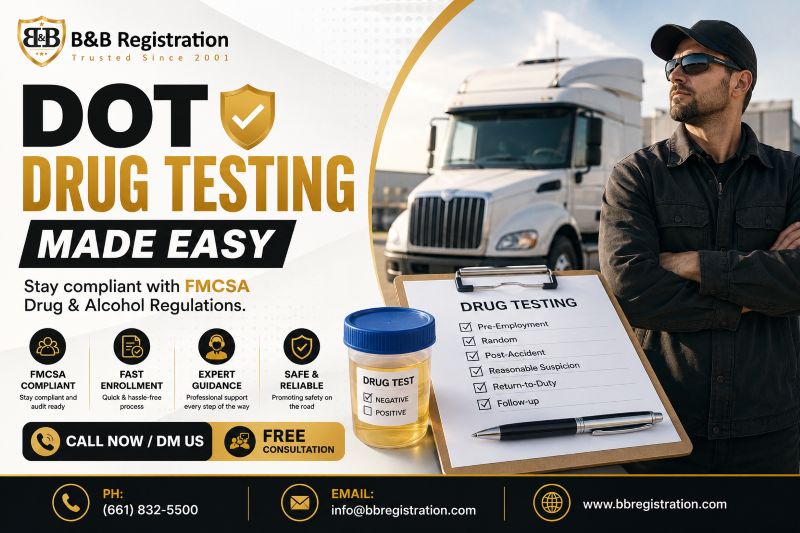
4. Drug and Alcohol Testing Failures
FMCSA requires participation in approved testing programs.
Requirements include:
- Pre-employment testing
- Random testing
- Post-accident testing
- Return-to-duty testing
Failure to comply can result in severe penalties.
5. IFTA Filing Errors
IFTA reporting mistakes are surprisingly common.
Problems often include:
- Missing mileage records
- Incorrect fuel reporting
- Late filings
These issues can lead to audits and costly assessments.
Warning Signs Your Trucking Business May Be at Risk
Your company may have compliance gaps if:
⚠ Driver files haven't been reviewed in over a year
⚠ Maintenance records are incomplete
⚠ You haven't conducted internal safety reviews
⚠ Drivers frequently receive roadside violations
⚠ Your CSA scores are increasing
⚠ You're unsure about current FMCSA requirements
Even successful trucking companies can unknowingly expose themselves to risk.
How DOT Audits Can Impact Your Business
A DOT audit can happen with little warning.
Auditors may review:
- Driver records
- Safety programs
- Insurance documentation
- Drug testing records
- Maintenance files
- Hours of Service compliance
Businesses that fail audits often face corrective action plans, fines, and increased monitoring.
Preparation is the key to avoiding costly surprises.
The Financial Impact of Compliance Failures
Many trucking companies underestimate how expensive violations can become.
A single compliance issue can trigger:
- Fines and penalties
- Downtime
- Administrative costs
- Lost contracts
- Higher insurance rates
For small fleets, one major violation can impact profitability for months.
How Professional Compliance Support Helps
Managing compliance internally can be overwhelming, especially for growing fleets.
Professional compliance assistance helps businesses:
✅ Stay current with regulations
✅ Maintain required documentation
✅ Reduce audit risks
✅ Improve safety performance
✅ Save time and resources
✅ Focus on growth instead of paperwork
Having experts monitor compliance allows fleet owners to focus on operations and revenue generation.
Why Trucking Companies Trust B&B Registration
For more than 20 years, B&B Registration has helped trucking businesses navigate complex compliance requirements.
Our services include:
✔ DOT Compliance Assistance
✔ FMCSA Compliance Support
✔ Driver Qualification File Management
✔ IFTA Filing Support
✔ MC & USDOT Authority Services
✔ Safety and Compliance Reviews
✔ Expert Guidance for Fleet Owners
Whether you're an owner-operator or managing a growing fleet, our team helps keep your business compliant and protected.
2026 Compliance Checklist
Before the next DOT inspection or audit, ask yourself:
✅ Are Driver Qualification Files complete?
✅ Are maintenance records updated?
✅ Is your drug and alcohol program compliant?
✅ Are IFTA reports current?
✅ Are insurance documents active?
✅ Are Hours of Service records accurate?
✅ Is your DOT authority information current?
If you answered "No" to any of these questions, now is the time to act.
Final Thoughts
DOT compliance isn't just a government requirement—it's a critical part of running a successful trucking business.
The companies that thrive in 2026 will be those that proactively manage compliance, reduce risk, and protect their operations before problems occur.
Don't wait until an audit, roadside inspection, or violation puts your business at risk.
Stay compliant. Stay legal. Stay profitable.